‘Help’ing to Forget Feminism: How Racism and Sexism are Personal and Not Political in the Film ‘The Help’
by Stephanie Troutman

The moral dilemma of 1950’s racism is a prominent theme of the 2011 film, “The Help,” adapted from the novel of the same name by Katherine Stockett. The film was nominated for numerous Academy Awards (Octavia Spencer won for Best Supporting Actress) and won several Screen Actor’s Guild Awards – Octavia Spenser (Minny) and Viola Davis (Aibileen) picked up individual awards for acting, as did the entire cast for best ensemble. Though wildly popular with mainstream audiences, both the book and the film versions of “The Help” have been the subject of widespread controversy and debate in academia and in the blogosphere. Most recently Melissa Harris Perry devoted a segment of her show (“The Melissa Harris Perry Show”) to a harsh critique of the film’s inaccurate historical conveyances. It seems that White people love the film as an exploration of bygone inequality in interracial relations between White and Black women and the evils of racism. But given the film is not only about race, but also about women, what about the evils of sexism?

“The Help” works against feminism by playing on stereotypes of women’s problematic relationships with each other.  Because male characters play only minor roles, the film gives a false sense of female dominance, even solidarity.  In this “society of women,” however, race and class play out in accordance to stereotype with a variety of women who judge, hate, and police one another.  The film maintains its theme of female solidarity by depicting racism and sexism more as consequences of individual behaviors and less as a set of social hierarchies generated and enforced through legal mandates and institutional practices.  And each of the main (white) female characters in “The Help” displays questionable moral behavior in her treatment of other women, typified by interpersonal, emotional abuse and violence between women.

The audience is meant to identify with Skeeter (Emma Stone) as she grows into herself – thanks to her childhood maid, Constantine (Cicely Tyson) and later on with “the help” of Minny and Aibileen through the stories they share with her about their lives as maids in Mississippi.  Through these journeys toward self-awareness (or what feminists have called “coming to voice”) Skeeter is made recognizable as a budding feminist interested in social justice through her desire to tell the maids’ stories – something no one has done before.  But in the end, upon publication of her book, her willful pursuit of feminism diminishes, and rather than choosing a feminist morality, she is instead forced into it.  The final scenes of the film depict her boyfriend, Stuart (Chris Lowell) leaving her for “stirring up trouble” and for being “selfish” for pursuing a career after her book (from which the novel and film draw their title) “The Help.”  His parting words:  “I think you’re better off alone.”  What Stuart tells Skeeter about herself is echoed by the maids Aibileen and Minny, that essentially Skeeter has to take the job offer in New York, because no local man will want her, and she has alienated all of her female peers by outing them as racists in her book.  If a feminist morality hinges on solidarity and sisterhood, Skeeter, having found herself, is left with neither, and is free to follow a life that is based on a morality that emphasizes free choice and autonomy over caretaking and solidarity.

Thinking more about sisterhood, given “The Help” is a film about women, we need to ask what does it tell us about women’s relationships with other women?  Black women’s solidarity and capability for friendship is contrasted with White women’s emotional violence with one another, as embodied by the character Hilly’s maltreatment of her own mother, several of the maids, the woman she calls “White-trash,” Celia Foote, and her so-called friends Skeeter and Elizabeth.  The quintessential mean girl, she bullies, castigates, frames, lies, and uses her power to maneuver against other women.  Each negative stereotype about female group dynamics along race/class/generational lines is present in “The Help.”  Black women’s relationships are depicted as “true” friendships, even though that solidarity seems to be depicted as due to the marginal spaces these women occupy, the result of poor social standing, and limited political power.  The type of progressive (Black) womanhood or a solidarity based on positive elements is absent here.  And, frankly, Aibileen places Minny at risk by involving her in the initial interviews with Skeeter.  That is to say, the morality of justice seems to outweigh a morality of caretaking.

In the end stereotypes about women, both Black and White, outweigh honest filmmaking.  In her SAG award acceptance speech on January 29, 2012, Viola Davis (Aibileen) stepped up from her front-row seating to remind viewers that racism and sexism are not just “women’s issues,” but everyone’s problems.  Ironically feminism, which has been effectively challenging these forms of oppression for a very, very long time, was given a seat in the balcony.

**

Stephanie Troutman is Assistant Professor of Women & Gender and African-American Studies at Berea College, Berea, KY. 


Opinions expressed in these Op Ed pieces are solely those of the author and not intended to represent AME. AME chooses to publish pieces that will foster discussion on issues related to moral psychology, philosophy, development, and education.

Posted in Uncategorized
| Leave a reply

Navigating the Semantic Minefield of Promoting Moral Development
by Marvin W. Berkowitz

I am confused about words. I have found the language of moral education to be a semantic minefield. There is no moral GPS to help with such semantic navigation. I have lectured, written, etc. under quite a set of terms. The terminology varies geographically and historically. And there are many overlapping terms used: moral education, values education, character education, civic education, citizenship education, democratic education, moralogy, social-emotional learning, positive psychology, etc. As a doctoral student in developmental psychology, I discovered Kohlbergian moral development. It began a 40-year journey that has had many terminological turning points. For about two decades I walked a straight line under the banner of “moral development and education.” I renounced the “values education” and “values clarification” movements, embracing the Kohlbergian party line that values and virtues were arbitrary and non-universal, a “bag of virtues.” As a devoted member of AME, I almost never missed an annual meeting. I served on the Board of AME for about 15 years, at first informally at the invitation of Kohlberg and eventually more formally through member elections.

Then I began to realize that the field was stagnating, for want of an applied focus. I loved convening with my colleagues (and still do); this was my intellectual family and many of the AME members were my close and long-standing friends (and still are). Then in 1992, I was invited to a meeting in Aspen CO, dubbed a “Youth Values Summit.” At this meeting I discovered that only a couple of months earlier another meeting had occurred in Wisconsin, and the term du jour there was “character.” The Racine meeting was the birth of the Character Education Partnership, which remains the major US character education organization. Both were attempts to start a national movement to support schools that promote values or character development. I realized that these were the “bag of virtues” folks that I and my fellow Kohlbergians had been conceptually denigrating. They were smart and well-intentioned, but did not know much about the psychology of morality in general nor moral reasoning development in particular. However, they really wanted to impact schools and students.

When Bill Gatherer of the Scottish Gordon Cook Foundation attended my AME workshop on moral dilemma discussion methods, he decided that British “values education” needed training in American “moral education.” This led me to dare a major session at the AME conference in New York in 1995, in which the AME and CEP leaders would attempt to find common ground. CEP needed AME’s scholarly base and AME needed CEP’s applied vision. Sadly, it bombed…miserably. There was too large a gap between AME’s scholarly approach and CEP’s atheoretical pragmatic school-based perspective.

So I decided to live in both worlds, and, in accepting my current position, found myself moving from the moral world to the character world, after a brief stop in the values world (Scotland). Some of my colleagues thought that I had experienced a psychiatric breakdown…really. In fact, nothing had changed but the labels. Yet I was repeatedly forced to explain and defend. Reflecting on this, I reached two conclusions about this semantic mess.

First, while there are differences between these fields, in many ways they are like a predominantly overlapping set of Venn diagram circles. The shared space is that all are endeavors to understand, explain, and/or impact the development of pro-social characteristics in children and adolescents. They are fundamentally about socializing each subsequent generation of youth to be contributors to, rather than detractors from, the common good; to nurture justice and caring in the world. In some cases they may focus more on social competencies (e.g., social-emotional learning) or on knowledge of the good (e.g., values and character education) or on socio-moral critical thinking competency (e.g., moral education) or on the knowledge, skills and dispositions of a contributing member of a democratic society (e.g., civic, citizenship or democratic education), but in all cases they are about supporting the positive development of children and adolescents as agents of justice and care.

Conflict between and discomfort with the terms seem inevitable. Science has devolved from a global pursuit of truth to more of a “my theory can beat up your theory” philosophy of science; a kind of scientific imperialism. Certainly individuals and organizations have wedded themselves to specific terms and are reticent to give them up; and so find ways to exaggerate the differences and vilify their conceptual “enemies.”

A deeper reason that the language wars persist and likely will always persist is that this broad field is inherently polarizing. In dealing with morality, ethics, goodness, social justice, and the model of a good person, people of different ideologies will be suspicious of others. This stuff is so important, not just to the world but to our individual identities and psyches, that we balk at the prospect that someone else will meddle with our core commitments and beliefs, and those of our children and communities. So we become paranoid and project our fears onto the terms. And we search for the holy semantic grail; the one word that will unify us all.

It doesn’t exist. It never will exist, because it is not the words that are flawed. Rather it is our discomfort with the domain. So I have decided that I don’t care if you call it character or values or morality or something else. All I care about is that we look to what valid science and philosophy can tell us about how to make a just and caring world by nurturing the positive development of our youth. Call it what you will. Just do it and do it wisely and well. That is the character and value of moral education.

**


Marvin W. Berkowitz is the Co-Director of the Center for Character and Citizenship, and the Sanford N. McDonnell Endowed Professor of Character Education, at the University of Missouri-St. Louis.


Opinions expressed in these Op Ed pieces are solely those of the author and not intended to represent AME. AME chooses to publish pieces that will foster discussion on issues related to moral psychology, philosophy, development, and education.

Posted in Uncategorized
| 2 Replies

Racial Integration is a Civic Imperative
by Lawrence Blum

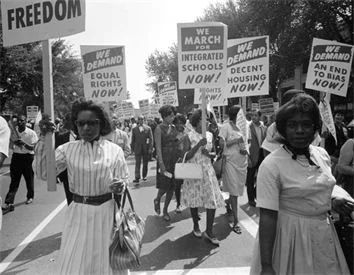
Racial integration has fallen off the table of “education reform” offerings. Yet racial integration is a moral imperative, as Martin Luther King Jr. said. And it is even more of an imperative than when he said it since our society is now so much more diverse than it was in the 1960’s. It’s a paradox. We are more and more diverse overall, yet our neighborhoods and our schools are less and less diverse, and increasingly segregated by wealth and race.

Why is school integration a moral imperative? First, only if people of different races and ethnicities interact with each other as young people can they learn the habits of respectful interaction with those who are different. Only then will they gain empathy from learning about the distinctive experiences of people who are different from them. Only then will they learn to see people who differ from them racially and ethnically as equals and fellow citizens. Only then will they be able to participate knowledgeably in democratic deliberation that seeks a common good. Only if young people routinely encounter and learn from those who are different will they be able to build a harmonious society out of their differences.

Racial integration is also a moral imperative because it is the only road to social justice, especially in education. Separate can never be equal. Only if students of different groups attend the same schools can they consistently receive equal educations. And the classes in those schools must also be integrated. Re-segregation inside desegregated schools won’t do. The research is clear that one of the surest ways to diminish the racial achievement gap is through integration. There can be no equal opportunity in education until we have shrunk this gap, between white students on one side and blacks and Latinos on the other.

If racial integration is so vital, why isn’t it happening? It did happen for a while. From 1968 until 1980, there was a strong push to integrate schools, all over the country and especially in the South. This movement was driven partly be judicial mandate, but also by a widespread recognition, at the school district level, among the general populace, that racial integration was better education and was better for society too. And it shrunk the achievement gap too.

But by the late 1980’s, this progress started to be turned around. Why? For a few reasons. One is that over the past twenty years or so, courts have released school districts from mandates to integrate. The nadir of judicial retreat from integration was the 2007 “Parents Involved” case. There the Supreme Court went even further than previous decisions, and said that districts could not integrate if they achieved the integration by using students’ racial identity to assign them to schools (by making sure that schools did not become too segregated). Since race-sensitive assignment policy has been the main way districts have achieved integration, this decision presented a serious obstacle, although it built on previous court decisions that released our society as a whole from rectifying its legacy of racial injustice and segregation.

Another reason for the retreat from integration is that the field of “education reform” is crowded with all kinds of other initiatives which do not include integration, yet have no proven record of improving education for the most disadvantaged students of color—reforms such as paying teachers for improved test scores of their students, opening more charter schools, closing schools whose students score below some defined standard, weakening teacher protections and unions, and constant reliance on test scores to measure students’ educational progress. The evidence shows that school integration, along with funding preschool education and equalizing funding disparities are much more reliable ways to reducing achievement gaps.

The deeper problem here is the failure in most current reform to foreground the civic purposes of education mentioned above—training a new generation in the virtues of civic engagement and understanding for a diverse society. Education is not only to provide individual students with the tools of social mobility and economic viability. It is also to serve a social good, to realize ideals of social justice, mutual respect across differences, and democracy.

One ray of hope on the horizon is a set of guidelines that the federal Departments of Justice and of Education issued in December of last year. The guidelines instruct school districts in steps they can take to achieve integration in their schools, within the constraints imposed by the judiciary, especially in the Parents Involved decision. For example, a district can use residence in a black neighborhood as a basis for student assignment, even though it cannot use the student’s actual race. The guidelines interpret the Parents Involved decision as allowing for a good deal more integrative efforts than did the Bush administration’s guidelines. The Obama guidelines are a ringing assertion of the civic purposes of integrated education: “Racially diverse schools provide incalculable education and civic benefits by promoting cross-racial understanding, breaking down racial and other stereotypes and eliminating bias and prejudice.”


**

Lawrence Blum is the Distinguished Professor of Liberal Arts and Education at the University of Massachusetts, Boston.  He is the author of the forthcoming High School, Race, and America’s Future: What Students Can Teach Us about Morality, Diversity, and Community.


Opinions expressed in these Op Ed pieces are solely those of the author and not intended to represent AME. AME chooses to publish pieces that will foster discussion on issues related to moral psychology, philosophy, development, and education.

Posted in Uncategorized
| 3 Replies

AME Op Ed

I’ve been honored to serve this year as President of AME and look forward to the next two years.  I’d like to take this Forum opportunity to  tell membership about an idea that will finally come to fruition on our web-site, an Op Ed section.  This section on our web page will be a place for debate, discussion, and comment, a place where AME voices can be heard about important topics.

The idea for an Op Ed page or AME blog began over 10 years ago when I first was on the Executive Board.  Then President Monica Taylor asked me to make a proposal to the board with regard to how AME work could reach a broader audience through the media.  I presented several ideas and concerns were raised with regard to whether  we could ever agree on one AME position, whether we might have a public relations volunteer who matched up members to journalists when news developed that could benefit from a moral ed/moral development perspective, and whether we could state opinions publicly about certain topics given our 501C status.  After that meeting in Glasgow, the idea of media outreach was dropped.

A few years later, the second time I was on the board, I became concerned when I learned that juveniles in the United States who had committed murders were being executed.  Against execution in any form, I was particularly disturbed by this and discovered there was an important Supreme Court case  (Roper v Simmons, 2005) that was going to decide whether it was illegal.  Several organizations were writing briefs to the court that were in effect letters that presented both an opinion and research to support that opinion.  I spoke to a person from an anti-death penalty NGO who was organizing the briefs for the lawyers presenting the case and he said that such a statement from the Association for Moral Education would be very helpful.   So, at that time, I researched with then President Steve Thoma whether or not we could do this as an organization, feeling fairly certain that the vast majority of members would agree that the U.S. should not be executing juveniles.  I believed we had something unique to say about these juveniles and about their moral development post adolescence.  But our tax status precluded such an effort. Instead I collected names via Larry Nucci’s listserv and sent a petition saying that we were all moral development researchers and educators but did not use AME’s name.  The Supreme Court did make the right decision to not execute juveniles.

Now, as President, I have introduced an idea of an Op Ed page.  My dream for this page is not just that AME members can discuss with each other various theoretical disagreements in the field, but that we can write and respond to essays that look outward to important current events, practices in the field, and issues.  I talked to the board about this and board members Larry Blum and Bruce Maxwell  presented  a proposal that was passed last June (we have online meetings and voting). Since then a committee led by Communications Coordinator Eric Marx and including Larry Blum, Don Reed, Elizabeth Vozzola, and Kaye Cook have been “meeting” via emails to develop the process by which these editorials will be solicited, chosen, and vetted.

My vision for this page on our web site is that members write their opinions about important topics (with the disclaimer at the top of the page that the opinion is not an expression of the official position of AME) and that other members and the public have an opportunity to respond.When there is a particularly relevant and important essay, the committee members send the URL to other listservs and blogs they may be reading.  This is one of the ways the smart and important opinions of our members can reach a wider audience, while it is also a way for us to continue throughout the year the great discussions we have at conferences.

Very soon we will have our first op ed piece up and ready for your comments.   We invite you to propose ideas to Eric Marx or me with regard to writing an essay (about 600-800 words) on a topic of wide interest that also has a moral education/philosophy/psychology slant.   Do you want to respond to Diane Ravitch’s article on School Reform in the New York Review of Books?  Do you want to argue against evolutionary views of moral development?   What is wrong with “three strikes and you are out” policies in schools?   In treating kids gone wrong, have we lost sight of the fact that kids develop?  Given the possible effect of sustained playing of violent video games on development, should they be protected as “free speech” (as the Supreme Court recently ruled)?

I’m very excited about this new project and hope you will start thinking of opinions to share that will stir the community to discussion and be a resource for anyone who happens to come across our web site when searching for more information.    Please let me know your thoughts, either by email or over a cup of one of the many wonderful teas we’ll be tasting in Nanjing.  I look forward to seeing many of you there for what looks to be an exceptional conference!

Sharon Lamb,

President, AME


Opinions expressed in these Op Ed pieces are solely those of the author and not intended to represent AME. AME chooses to publish pieces that will foster discussion on issues related to moral psychology, philosophy, development, and education.

Posted in Uncategorized
| Leave a reply